Emma Gentili: “A Voice Is More Than Sound - It Carries a Story, an Emotion, a Message”

The radio presenter, activist and vocalist on finding an authentic voice, the power of music and her creative collaboration with Colorful Door
Vienna, Oktober 1 , 2026In a world in which everyone seems to have something to say, being truly heard has become something rather different.For Emma Gentili, the voice is more than a means of communication. It is an instrument, a form of expression and, at times, a way of creating a connection between people.A radio presenter, activist and vocalist, Gentili has developed her work across several creative fields, moving naturally between broadcasting, music and spoken word. Her artistic journey has also brought her into collaboration with Colorful Door, where her voice has become an important part of several distinctive projects.Among them is “HA?”, a nine-track German-language album released on 14 February 2025. The project marked a new chapter for Colorful Door, with Gentili providing the vocals and giving the album much of its emotional and interpretative character.Her collaboration with Colorful Door continued with “The Compass”, a spoken-word project in which the voice itself becomes a central artistic instrument.We spoke to Emma Gentili about radio, music, working in German, the discipline of vocal performance, social engagement and the importance of remaining authentic in a world filled with competing voices.
Emma, your professional life brings together radio, music, activism and art. How would you describe what you do?
Emma: I would say that, ultimately, I work with communication, simply through different forms. Sometimes that means radio, sometimes music, sometimes conversation, and sometimes engagement with a social issue that I feel deserves attention.I have never wanted to put myself into just one category. For me, these different areas complement one another. Each experience teaches me something that I can bring into the others.
Radio is such an intimate medium. What has working behind the microphone taught you about people?
Emma: It has taught me that everyone has a story. Sometimes all it takes is the right question and enough space for someone to speak.Radio has also taught me that you do not always have to have an answer. Sometimes it is more important to admit that you do not know something and to be willing to listen to another perspective.There is something very particular about radio. You may not see the person listening to you, but you know there is someone on the other side who can recognise sincerity — and insincerity.
Your collaboration with Colorful Door is particularly notable for the album “HA?”. What did the project mean to you?
Emma: “HA?” was a very special experience for me. Working on a complete album in German meant entering a different artistic space.It was not simply about singing the songs. I wanted the voice to carry the emotion, the atmosphere and the character of each piece. It was important to me that the vocals were not just another technical layer in the production, but that they helped tell the story of the album.
How challenging was it to perform an entire project in German?
Emma: Every language has its own rhythm, character and musicality. German was an interesting challenge because pronunciation, rhythm and emotion all have to work together.For me, the key was to find a balance between precision and feeling. If you concentrate too much on technique, you can lose the emotion. But if you ignore the language, you lose authenticity. Finding that balance was one of the most rewarding parts of the process.
Your voice is central to the identity of “HA?”. How do you approach a vocal performance when you are telling different stories through different songs?
Emma: I try to treat every song as its own story. Not every piece needs the same emotion or the same approach.Sometimes the voice needs to be gentle, sometimes direct, sometimes restrained. The interesting part is discovering what each song needs rather than approaching everything in exactly the same way.The voice is very personal. Even when many people contribute to a project, the voice can become the element that gives a song its identity.
Do you see a connection between the voice you use on the radio and the voice you use as a vocalist?
Emma: Absolutely. Radio taught me how important intonation, pauses and the way a particular word is delivered can be. Music adds melody and rhythm to that.But the foundation is the same: communication. Whether you are speaking into a microphone or singing a song, you are trying to reach another person.
You also contributed to “The Compass”, Colorful Door’s spoken-word project. What appeals to you about spoken word?
Emma: Spoken word is fascinating because the voice is almost completely exposed. There is no melody to carry you. The words have to stand on their own.With “The Compass”, I enjoyed being able to explore the relationship between voice, text and emotion in a different way. It requires concentration, but it also creates a very intimate connection with the listener.
You are also an activist. Do you believe art has a responsibility to engage with society?
Emma: I think art can create a space for conversation. It does not necessarily have to provide answers. Sometimes asking the right question is much more powerful.I do not think an artist has to tell people what to think. I am much more interested in work that encourages people to think for themselves. If a song, a performance or a piece of writing makes someone pause and look at an issue differently, something meaningful has already happened.
We live in a time of constant information and countless competing voices. What does having an authentic voice mean to you?
Emma: It means remaining true to yourself. It does not mean having to be the loudest person in the room.Sometimes authenticity means knowing when to speak and when to listen. I think audiences are very perceptive. They can sense when something is genuine, even if they cannot always explain exactly why.
What would you like people to feel when they hear your voice?
Emma: I would like them to feel something real.They do not have to like everything I do, and I do not expect everyone to connect with every song or project. But if a word, a melody or an emotion stays with someone after the music has stopped, then I feel that the work has achieved something.
Looking back at your work with Colorful Door, from “HA?” to “The Compass”, what has the collaboration given you?
Emma: It has given me the opportunity to explore different ways of expressing myself. One project through song, another through spoken word, and throughout all of it, through the voice.I particularly value projects that do not create rigid boundaries between different forms of art. Some of the most interesting things happen precisely where music, language and emotion meet.

Finally, what can we expect from Emma Gentili next?
Emma: Hopefully, new projects, new music and new collaborations. I do not like closing doors before I know what is behind them.There is something exciting about not knowing exactly what comes next, while still knowing that you want to keep creating.
A Voice That Became Part of the Story
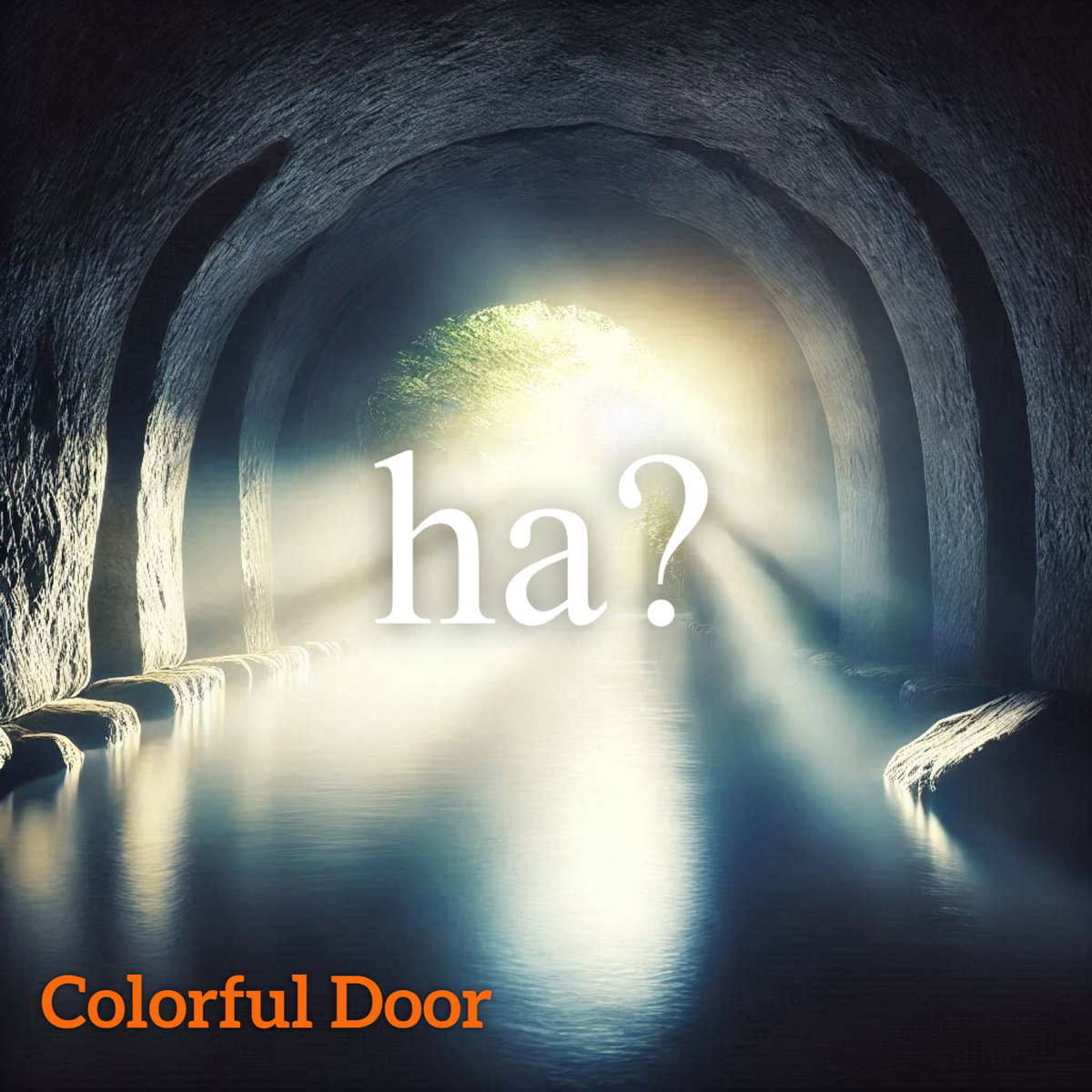
Emma Gentili’s collaboration with Colorful Door demonstrates how profoundly a voice can shape the identity of an artistic project.On “HA?”, Colorful Door’s German-language album, her vocals form a central part of a nine-track collection exploring relationships, love, disappointment, doubt, human contradictions and the traces people leave behind.With “The Compass”, the collaboration moves into spoken word, placing the voice itself at the heart of the storytelling.And perhaps that is the most fitting way to describe Gentili’s artistic approach. For her, the voice is not simply an instrument. It is a way of telling stories, creating emotion, opening conversations and leaving something behind once the sound has faded.
Text taken from: https://substack.com/@musicwordsandstories